
One-line Positioning
ERPNext is an open source ERP system built on the Frappe Framework. It helps businesses manage core operations such as accounting, inventory, sales, purchasing, manufacturing, projects, HR, and customer service in one place.
Basic Information
| Item | Information |
|---|---|
| Project | ERPNext |
| GitHub repository | frappe/erpnext |
| Website | frappe.io/erpnext |
| Description | Free and Open Source Enterprise Resource Planning |
| License | GPL-3.0 |
| Main languages | Python, JavaScript, TypeScript |
| Foundation | Frappe Framework, Frappe UI |
| Stars | About 35.6k |
| Forks | About 11.7k |
| Default branch | develop |
| Latest version | v16.22.0 |
| Created | 2011 |
What Problem It Solves
As a business grows, its software stack often becomes fragmented: accounting in one tool, inventory in another, sales and purchasing in spreadsheets, and projects, HR, and support somewhere else.
Each tool may work on its own, but together they create familiar operational problems:
- Customer, order, inventory, and invoice data must be entered repeatedly.
- Sales, purchasing, warehouse, and accounting records do not always match.
- Management needs to stitch together reports from multiple systems.
- Commercial ERP systems can be expensive and difficult to customize.
- When business processes change, a patchwork of tools is hard to adjust.
ERPNext addresses this by putting core business modules into one open source ERP platform, so operational data, financial data, and workflows can move through a single system.
Core Features
ERPNext covers the daily operating chain of a business. It is not just a single-purpose accounting or inventory tool.
Accounting and Finance
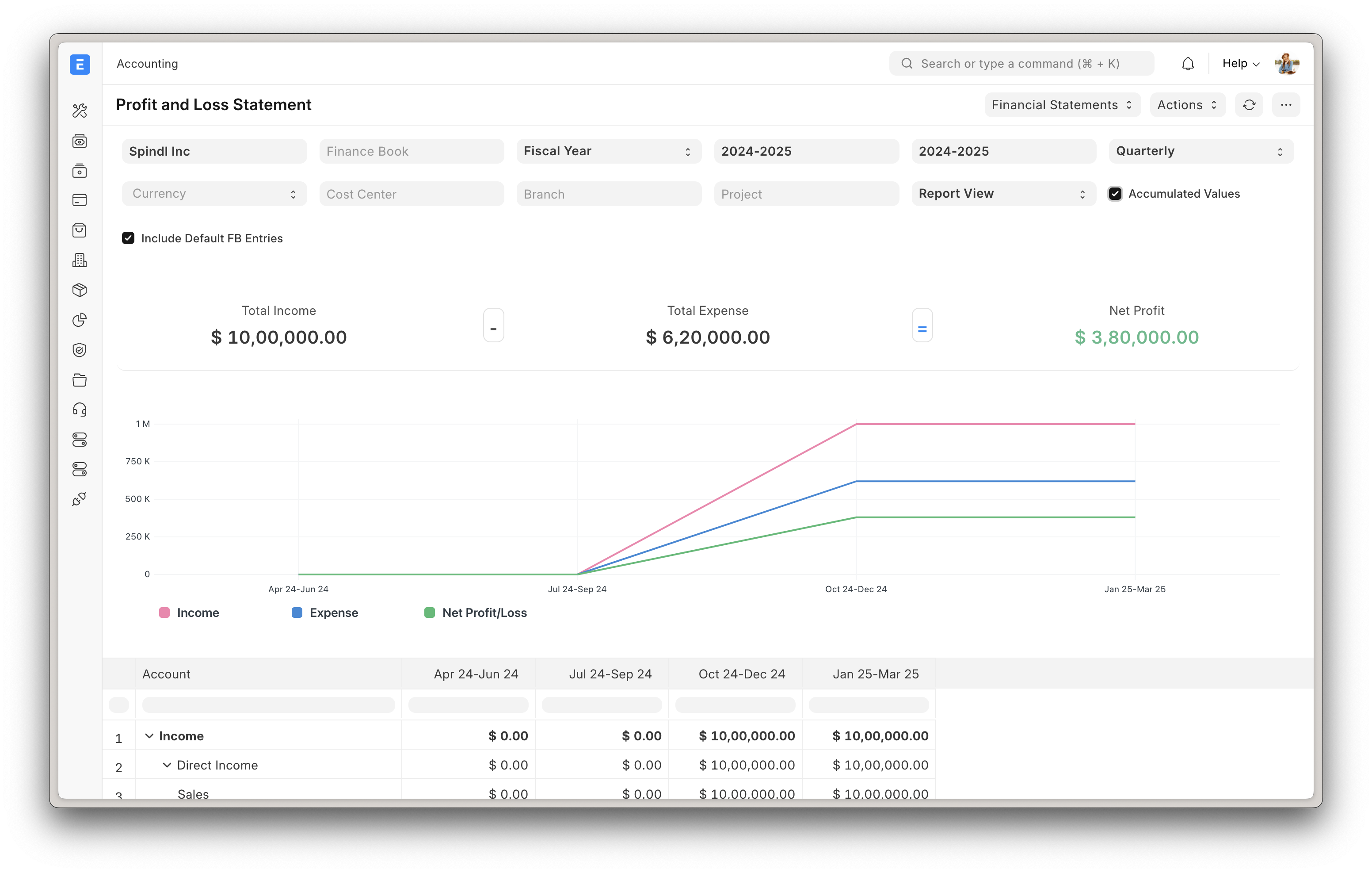
ERPNext provides general ledger, accounts receivable, accounts payable, invoices, payments, cash flow, and financial reporting. For many companies, the core value of an ERP is that business documents can naturally flow into financial results.
Sales, Purchasing, and Inventory
From customers, quotations, and sales orders to suppliers, purchase orders, receipts, invoices, warehouses, items, batches, serial numbers, and stock transfers, ERPNext connects product flow, order flow, and financial flow.
This makes it useful for distribution, retail, trading, manufacturing, and other businesses that need continuous inventory and order management.
Manufacturing
ERPNext supports BOMs, work orders, production planning, material consumption, capacity planning, and subcontracting. It does more than record inventory; it can participate in the production process and connect purchasing, stock, and manufacturing plans.
CRM and Customer Service
The project includes CRM, leads, opportunities, customer follow-up, sales pipelines, tickets, and after-sales service workflows. For teams that need to manage the journey from lead to deal to support, this reduces a lot of tool switching.
Projects and HR
ERPNext also includes projects, tasks, timesheets, issue tracking, employees, attendance, leave, and payroll-related modules. For project-based or service businesses, these modules can be viewed together with finance, cost, and customer data.
Customization and Extension
ERPNext is built on the Frappe Framework. Frappe provides DocTypes, forms, permissions, workflows, REST APIs, background jobs, and other application-building features. That means ERPNext is not only a fixed business application, but can also serve as a foundation for internal systems.
Who It Is For
ERPNext is worth evaluating for teams such as:
- Small and medium-sized businesses that want one system for sales, purchasing, inventory, and accounting.
- Organizations with complex manufacturing, distribution, retail, service, or project workflows.
- Companies that prefer self-hosting an ERP instead of relying entirely on commercial SaaS.
- Teams with developers who want to customize workflows on top of an open source platform.
- Software service providers and digital transformation teams looking for an open source ERP foundation.
- Teams comparing open source ERP options such as Odoo or Dolibarr.
Quick Start
For quick evaluation, the official project recommends using a disposable Frappe Docker demo environment.
git clone https://github.com/frappe/frappe_docker
cd frappe_docker
docker compose -f pwd.yml up -d
After startup, wait a few minutes for the ERPNext site to be created. The default address is usually:
http://localhost:8080Default account:
Username: Administrator
Password: admin
For production deployment or development, continue with the official documentation:
- ERPNext documentation: https://docs.frappe.io/erpnext/
- Frappe Docker: https://github.com/frappe/frappe_docker
- Frappe Framework: https://github.com/frappe/frappe
Conclusion
ERPNext is one of the more mature projects in the open source ERP space. It is not just an accounting tool or a simple inventory system. It is a complete ERP platform that covers core business operations.
Its value is clear: broad functionality, open source control, wide module coverage, self-hosting, and deep customization.
If your team is looking for an open source ERP to manage sales, purchasing, inventory, finance, manufacturing, projects, and customer service, ERPNext deserves a place on the first evaluation list.